
Best PLA Filament for Beginners: What to Look For
A practical GFM 3D Lab guide focused on best PLA filament for beginners.
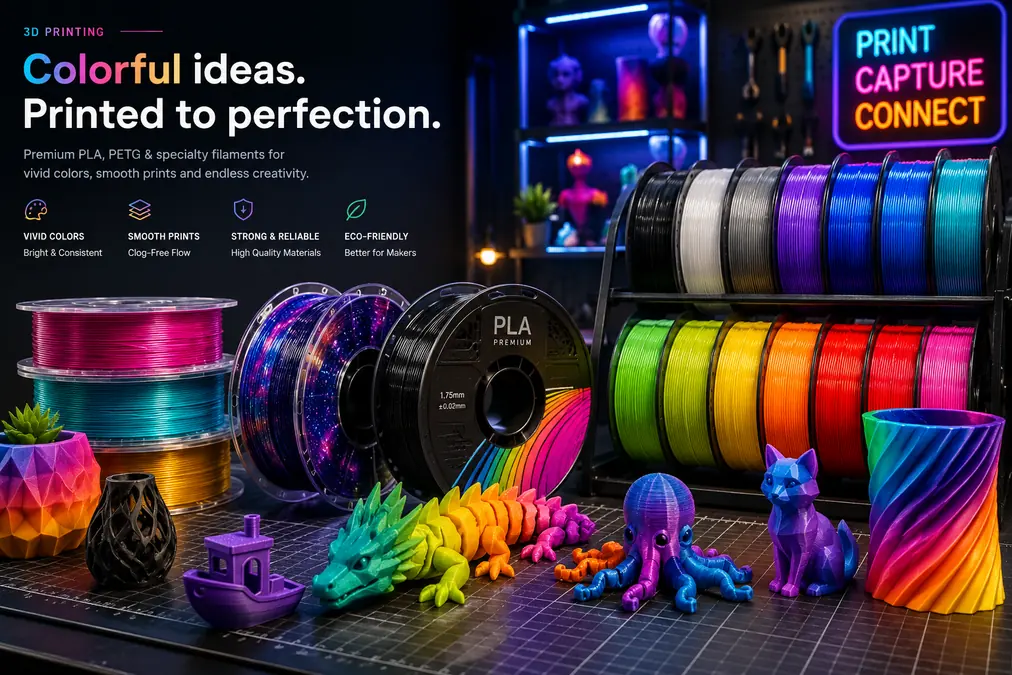
Start with consistency, not exotic colors
For a first spool, reliable diameter, clean winding and predictable temperature behavior matter more than specialty effects. PLA is popular because it usually prints at moderate temperatures and does not require an enclosed printer.
Choose the right finish
Standard PLA is the easiest baseline. Matte PLA can hide layer lines, while silk PLA emphasizes reflections and can make surface defects more visible. Specialty blends may need slower speeds or different temperatures.
Check the manufacturer’s temperature range
Use the range printed on the spool as a starting point, then run a temperature tower when quality matters. Your printer, nozzle, speed and room conditions can shift the best setting.
Keep filament dry
Moisture can contribute to popping, rough surfaces and inconsistent extrusion. Store opened spools sealed with desiccant and dry them when symptoms point to moisture.
Beginner buying checklist
Look for clearly labeled material, diameter and recommended temperature; sealed packaging; consistent reviews about winding and diameter; and a color you will actually use for calibration prints and projects.
Bottom line
Use this guide as a starting point, then verify specifications and compatibility for your exact equipment before buying or changing a setup.